
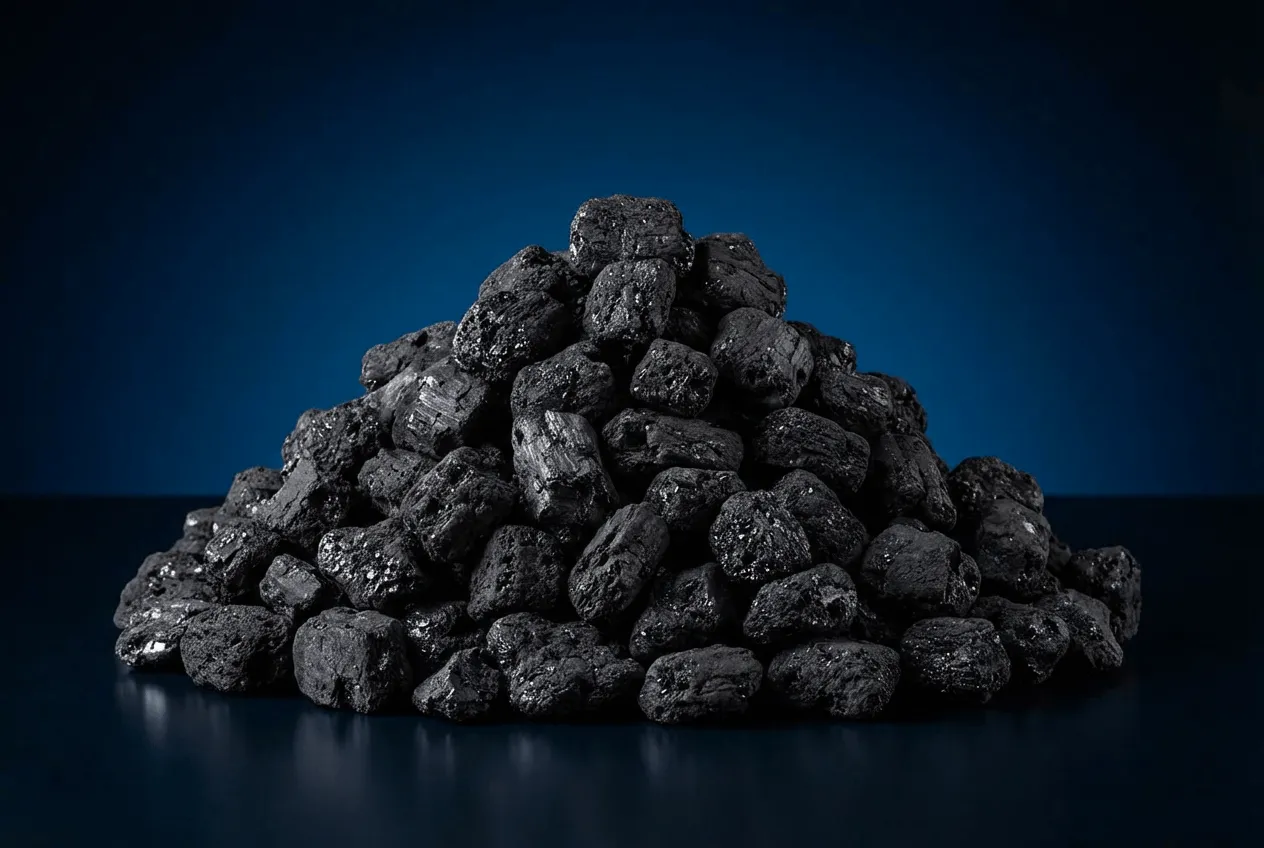
Calcined Petroleum Coke (CPC): The High-Purity Carbon Source
Calcined Petroleum Coke (CPC) is a highly purified form of carbon derived from Green Petroleum Coke (GPC), a solid carbonaceous residue generated during the refining of crude oil. The process of calcination involves heating GPC to extremely high temperatures (typically 1200°C to 1350°C) in a rotary kiln or shaft furnace, in the absence of air.
This high-temperature treatment removes nearly all moisture, volatile combustible matter (VCM), and residual hydrocarbons. The resulting material is a dense, high-purity carbon product characterized by very low electrical resistivity, making it an indispensable component in the electrochemical and metallurgical industries.
ERST Group supplies premium quality CPC, specializing in low-sulfur and high-purity grades required for critical applications.
Key Characteristics and Functions
CPC’s unique combination of high carbon content and low electrical resistance makes it a superior raw material for highly sensitive industrial processes.
Key Characteristics
- High Fixed Carbon: Typically exceeds 98.5%, crucial for effective reduction reactions.
- Low Electrical Resistivity: Essential for minimizing power consumption and heat generation in electrolysis cells and arc furnaces.
- High Density: Provides structural integrity and ensures consistency in electrode manufacturing.
- Low Ash and Metal Impurities: Especially important in aluminum production where impurities like Silicon (Si), Iron (Fe), and Vanadium (V) can contaminate the final metal product.
Primary Functions
- Aluminum Smelting (Anodes): CPC is the primary raw material used to manufacture pre-baked carbon anodes for the Hall-Héroult electrolytic process, consuming massive amounts of carbon to reduce alumina (Al2O3).
- Titanium Dioxide (TiO2) Production: Used as a reduction agent in the chlorination process.
- Recarburizer: Used in specialty steel and iron foundries to increase the carbon content of the molten metal.
- Graphite Electrodes: Used in the production of high-performance graphite electrodes for electric arc furnaces (EAFs).
Standard Chemical Specifications
CPC is primarily graded based on its Sulfur content and levels of key metallic impurities (especially Vanadium, Nickel, and Silicon), which impact its suitability for aluminum anodes.
Standard Calcined Petroleum Coke (CPC) Specification (Anode Grade)
| Element/Property | Specification | Importance in Aluminum Smelting |
|---|---|---|
| Fixed Carbon (FC) | Min 98.5 % | Defines purity; necessary for chemical reaction and density. |
| Sulphur (S) | Max 3.0 % (or lower, e.g., Max 0.8% for low-S grade) | High Sulfur leads to $SO_2$ emissions and corrodes cell linings. |
| Ash Content | Max 0.40 % | Impurities in the ash (Si, Fe) contaminate the aluminum metal. |
| Volatile Matter (VCM) | Max 0.50 % | Indicates calcination effectiveness; excess VCM reduces anode strength. |
| True Density | Min 2.08 g/cm³ | Affects carbon consumption rate and anode integrity. |
| Nickel (Ni) + Vanadium (V) | Max 300 PPM | Critical metallic impurities that transfer to the final aluminum product. |
Forms and Packaging
CPC is a granular product, and its physical properties are as important as its chemical purity.
- Grain Size: Typically supplied in various crushed and screened sizes, ranging from powder fines up to 50 mm lumps, tailored for the specific anode or electrode manufacturing process.
- Packaging: Due to its density and high volume usage, CPC is often shipped in large, durable 1000 kg Jumbo Bags (Big Bags) or in bulk vessels for large-scale operations.