
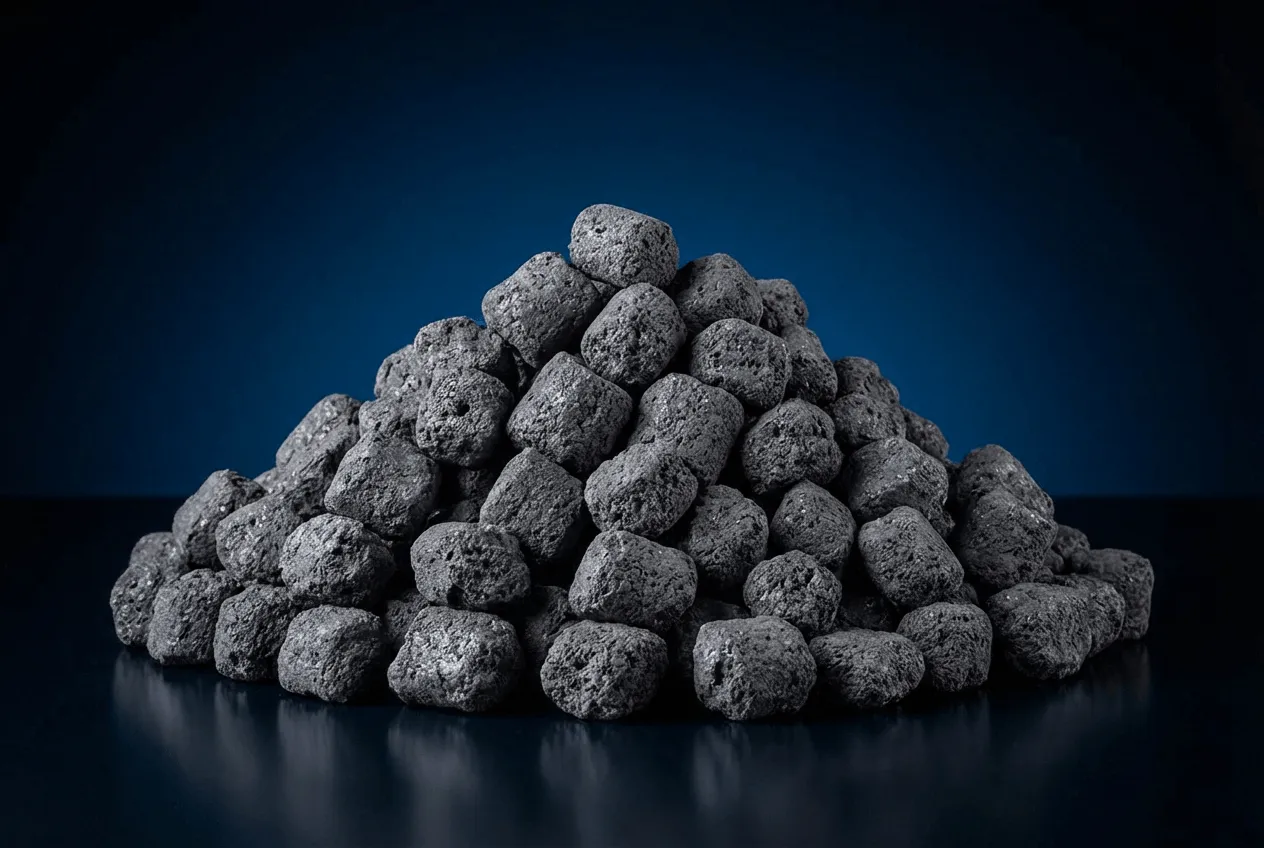
Semi Coke: The Efficient Low-Sulfur Carbon Reductant
Semi Coke (also known as Low-Temperature Coke or Gas Coke) is a clean, carbonaceous solid fuel and reducing agent produced through the low-temperature carbonization (LTC) or pyrolysis of high-quality coking coal or non-coking coal. Unlike metallurgical coke, which is subjected to high temperatures (above 1000°C), semi coke is typically processed at lower temperatures (around 600°C to 700°C).
This process effectively removes volatile matter (VCM) and moisture but retains a significant portion of its thermal energy and chemical reactivity. The resulting material is a high-fixed carbon solid with a honeycomb structure, making it highly reactive and ideal for various metallurgical and chemical applications.
ERST Group supplies high-quality Semi Coke, known for its consistency, low sulfur content, and high reactivity.
During graphitization, the amorphous carbon structure of the CPC is transformed into a highly ordered, crystalline graphitic structure. This transformation results in a material with exceptionally low electrical resistivity, high thermal conductivity, and very high purity (typically > 99.5% Fixed Carbon). GPC is considered the premium carbon material for conductive applications.
ERST Group supplies high-quality GPC, tailored for the most demanding electrochemical and metallurgical applications where maximum conductivity and purity are non-negotiable.
Key Characteristics and Functions
Semi Coke occupies a unique niche in the carbon market, offering a balance between the high purity of traditional coke and the volatility of coal.
Key Characteristics
- High Reactivity: Due to its specific processing temperature, semi coke possesses higher chemical reactivity than traditional metallurgical coke, making it an efficient reducing agent.
- High Fixed Carbon & Calorific Value: Provides significant heat and carbon contribution to processes.
- Low Sulfur Content: Generally has a low sulfur content, which is crucial for minimizing pollution and preventing sulfur pick-up in ferroalloys and metals.
- High Specific Resistance: Its resistance makes it valuable in electric furnace operations where it influences the electric current path.
Primary Functions
- Reducing Agent in Ferroalloys: It is widely used as a reductant in the production of ferroalloys (e.g., Ferro Silicon, Ferro Nickel, Ferro Manganese), often replacing a portion of more expensive metallurgical coke or charcoal.
- Industrial Fuel: Used as a clean, efficient fuel in industrial boilers, kilns, and power generation, particularly in regions with strict environmental regulations.
- Calcium Carbide Production: Serves as a primary carbon source in the production of calcium carbide (CaC2).
- Blast Furnace Injection: Can be used as a supplementary fuel (Pulverized Semi Coke Injection – PSCI) in smaller blast furnaces.
Standard Chemical Specifications
Semi Coke is graded based on its fixed carbon content, sulfur level, and ash content, which directly correlate to its effectiveness as a fuel and reductant.
Standard Semi Coke Specification (Metallurgical/Reductant Grade)
| Element/Property | Specification | Primary Role |
|---|---|---|
| Fixed Carbon (FC) | Min 83.0 % | Defines carbon contribution and efficiency as a reductant. |
| Ash Content | Max 8.0 % | Inert material; lower ash minimizes slag volume and contamination. |
| Volatile Matter (VCM) | Max 8.0 % | Ideal range ensures high reactivity and helps maintain furnace temperature. |
| Sulphur (S) | Max 0.40 % | Very low sulfur level is critical for ferroalloy quality and environmental compliance. |
| Moisture ($H_2O$) | Max 15.0 % | Higher moisture is typical of LTC products; should be dried before some uses. |
| Calorific Value | Min 6500 kcal/kg | Defines its energy content as a fuel source. |
Forms and Packaging
Semi Coke is a non-uniform granular material, often sized to meet specific furnace or boiler requirements.
- Size: Typically supplied in lumps ranging from 6 × 18 mm and 18 × 30 mm for metallurgy, or in larger lumps for fuel applications.
- Packaging: Commonly packaged in 1000 kg Jumbo Bags (Big Bags) or delivered in bulk quantities via rail or truck, requiring protection from significant moisture pickup.