
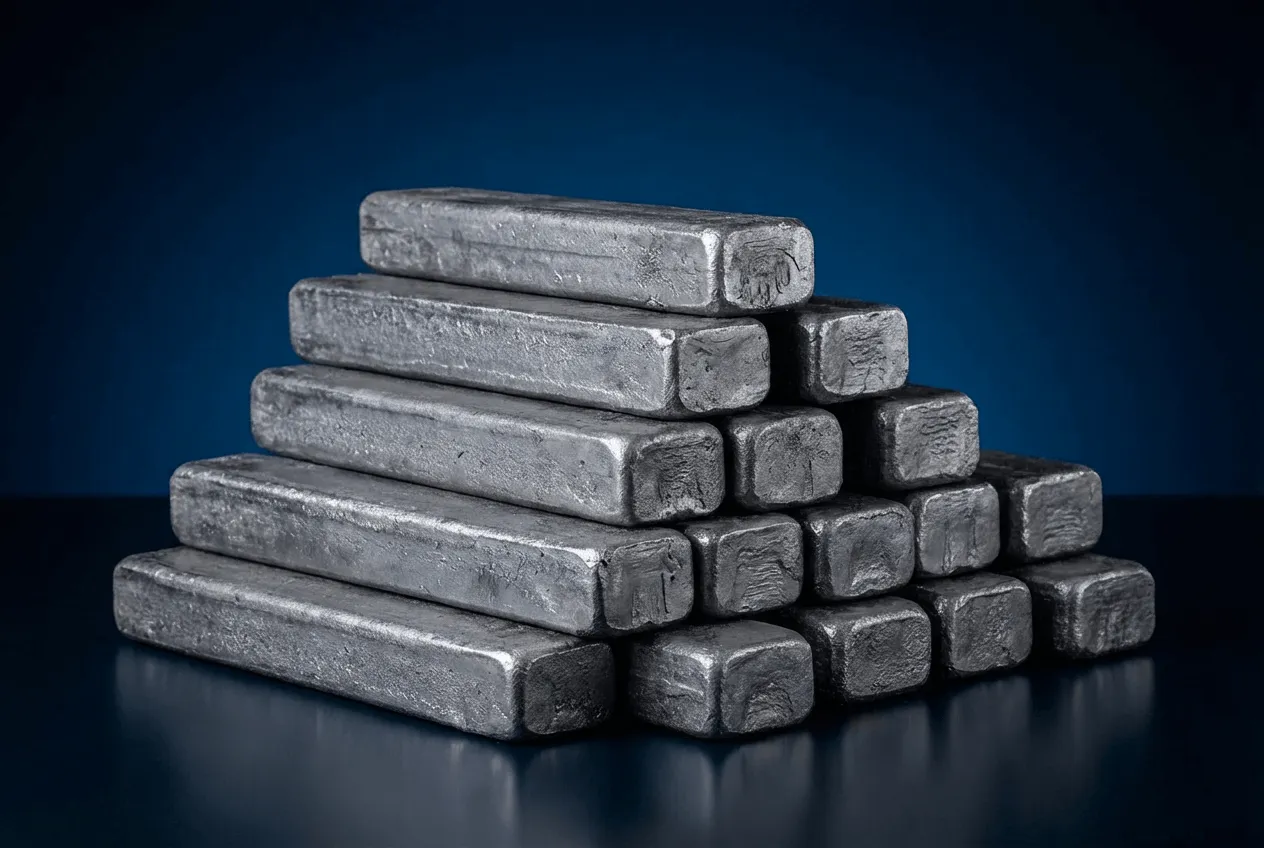
3SP Steel Billet: The Foundation for Construction Steel
A Steel Billet is a semi-finished casting product created directly from continuous casting or by rolling ingots. It is the raw material used for further hot rolling into finished long products like rebar, wire rods, and structural shapes.
3SP Steel Billet refers to a specific grade of general-purpose structural carbon steel, primarily derived from the former Soviet GOST standards (often analogous to ASTM A36 in terms of general application). The designation “SP” stands for Semi-Killed Steel or Balanced Steel (Poluspokoynaya in Russian), indicating that the steel contains a limited amount of deoxidizers, offering a good balance between production cost and mechanical properties.
ERST Group supplies high-quality 3SP Billets, meeting the essential requirements for infrastructure and general construction projects.
Key Applications and Functions
3SP steel is widely favored in construction due to its reliability, cost-effectiveness, and excellent workability.
Key Characteristics
- Good Weldability: The chemical composition, particularly the controlled carbon content, ensures excellent weldability.
- Balanced Properties: It offers moderate strength and good plasticity (ductility), making it versatile for bending and structural use.
- Cost-Effective: As a semi-killed carbon steel, it is generally more economical to produce than fully-killed (PS) steels, making it ideal for high-volume construction materials.
Primary Applications
- Rebar (Reinforcing Steel Bars): The principal end-product, crucial for reinforcing concrete in buildings, bridges, and highways.
- Wire Rods: Used for drawing into various wires, mesh, and fasteners.
- Small Structural Shapes: Angle bars, channels, and flat bars for general manufacturing and fabrication.
Standard Chemical Composition (GOST 380-94 / St3SP Equivalent)
The chemical composition of 3SP is controlled to ensure consistent weldability and mechanical performance, with Phosphorus and Sulphur strictly limited.
3SP Steel Billet Chemical Specification
| Element | Specification (%) | Impact on Steel Properties |
|---|---|---|
| Carbon (C) | 0.14 – 0.22 | Controls ultimate strength and hardness; essential for weldability. |
| Manganese (Mn) | 0.40 – 0.65 | Increases strength and improves hot workability. |
| Silicon (Si) | 0.05 – 0.17 | Deoxidizer; controls the semi-killed status (SP). |
| Phosphorus (P) | Max 0.040 | Impurity; must be minimized to prevent cold brittleness. |
| Sulphur (S) | Max 0.050 | Impurity; must be minimized to prevent hot shortness (brittleness). |
| Chromium (Cr) | Max 0.30 | Residual impurity; controlled. |
Size and Packaging Solutions
Steel billets are defined by their cross-section and length, optimized for rolling mill intake.
- Standard Sizes: Cross-sections are typically square, ranging from $100 \times 100$ mm up to $180 \times 180$ mm.
- Length: Lengths are custom-cut based on the end-user’s rolling mill requirements, commonly ranging from 6 meters to 12 meters.
- Packaging: Billets are supplied in bulk bundles, secured with steel straps (banding) to maintain stability during transport.