
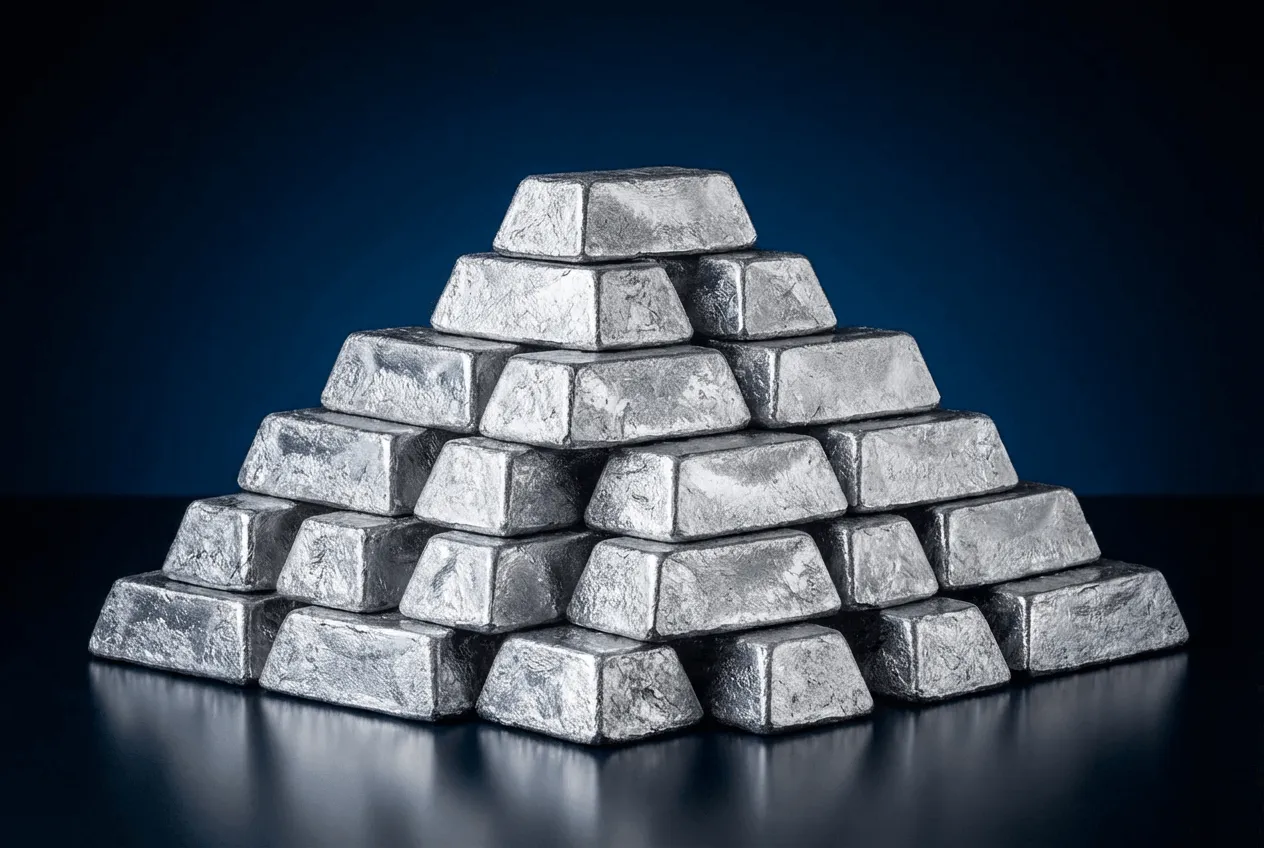
Antimony Ingot: The Key to Hardening and Fire Resistance
An Antimony Ingot is a block of refined Antimony (Sb), a semimetallic element known for its distinctive silvery-white, flaky crystalline structure. Antimony is primarily classified based on its purity, with the most common commercial grade being 99.65%, often referred to as Grade 99.65. Antimony is crucial for several industries due to its unique properties, namely its ability to harden alloys and serve as a highly effective flame retardant component.
ERST Group supplies high-quality Antimony Ingots, ensuring strict adherence to purity standards essential for specialized applications.
Key Applications and Functions
Antimony is an important material in metallurgy and chemistry, often utilized in small but critical quantities.
Key Characteristics
- Metallurgical Hardener: When alloyed with lead, antimony significantly increases the hardness and mechanical strength of the resulting alloy.
- Fire Retardant: Antimony trioxide (Sb₂O₃), derived from antimony, is one of the most widely used flame retardants globally.
- Semiconductor Properties: Antimony and its compounds have important uses in specialized semiconductor manufacturing.
Primary Applications
- Lead Batteries: Used in lead-acid storage batteries (as a hardener for the lead grids) to improve strength and casting properties.
- Bearing Alloys (Babbitt Metal): Its low coefficient of friction makes it essential for bearings.
- Ammunition & Cable Sheathing: Used to alloy lead for increased durability.
- Flame Retardants: Used extensively in plastics, textiles, and adhesives, particularly in the construction and automotive sectors.
Standard Purity and Specification
Antimony ingots are graded strictly by their minimum guaranteed purity, with other elements controlled as trace impurities.
Standard Antimony Ingot Specification (Grade 99.65)
| Element | Specification (%) | Impact of Impurity |
|---|---|---|
| Antimony (Sb) | Min 99.65 | Defines the grade purity; essential for alloying strength. |
| Lead (Pb) | Max 0.20 | Must be controlled, especially for chemical applications. |
| Arsenic (As) | Max 0.10 | Must be kept low for environmental and health reasons. |
| Iron (Fe) | Max 0.05 | Controlled impurity; affects magnetic properties. |
| Sulphur (S) | Max 0.05 | Controlled impurity. |
| Copper (Cu) | Max 0.02 | Controlled impurity. |
Size and Packaging Solutions
Antimony Ingots are typically cast into standard shapes and weights for ease of trade and handling.
- Ingot Weight: Standard weight is usually around 20–25 kg per ingot.
- Packaging: Ingots are stacked and secured on wooden pallets, often bundled into units of 1000 kg (1 MT). The packaging is designed to protect the material from moisture and physical damage during transit.