
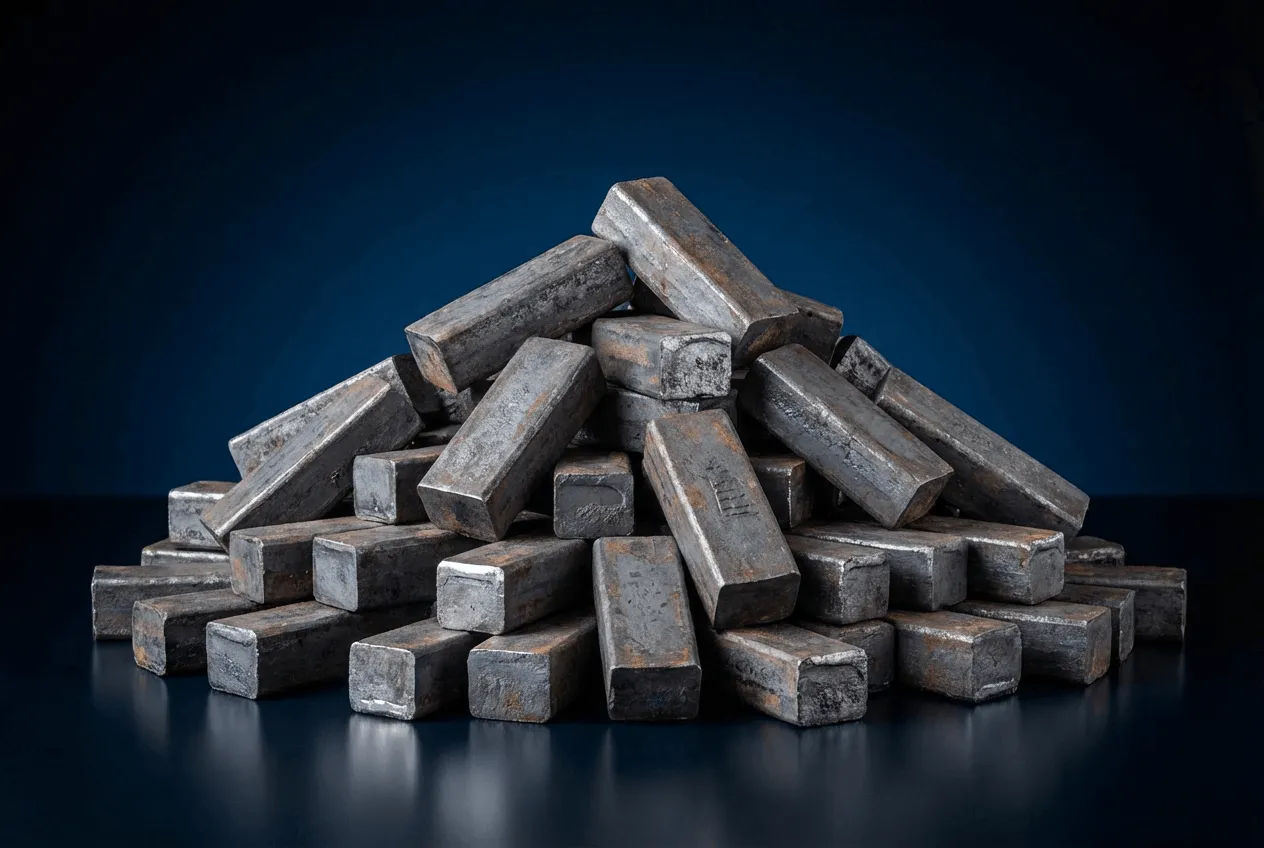
ST37 Steel Billet: General Purpose Structural Steel
A Steel Billet is a semi-finished product created through the continuous casting of molten steel, serving as the essential feedstock for rolling mills. These billets are subsequently hot-rolled into a variety of long products, including rebar, angle bars, channel sections, and wire rods.
ST37 Steel Billet refers to a highly popular and widely specified grade of carbon structural steel. This grade is typically aligned with European Standard EN 10025 S235JR or equivalent international standards. It is known for its fundamental strength, excellent weldability, and reliability in non-critical load-bearing applications. This grade is commonly utilized in general fabrication and light to medium construction projects.
ERST Group supplies high-quality ST37 Billets, ensuring compliance with specified chemical and mechanical property standards required for general construction materials.
5SP Steel Billet refers to a high-strength structural carbon steel grade, defined by the GOST standards (often referenced as St5SP). The key differentiator is the “SP” (or PS – Fully Killed Steel or Spokoynaya in Russian), which signifies that the molten steel has been fully deoxidized using elements like Silicon (Si) and Aluminum (Al). This full deoxidation process eliminates gas evolution during solidification, resulting in a cleaner, more homogenous steel structure with superior mechanical and processing properties compared to semi-killed grades like 3SP.
ERST Group supplies premium 5SP Billets, ideal for demanding civil engineering and high-load structural applications.
Key Characteristics and Applications
ST37 is a workhorse material in the construction and fabrication industries, valued for its versatility and cost-effectiveness.
Key Characteristics
- Excellent Weldability: The low to moderate carbon content makes ST37 highly suitable for various welding techniques without requiring extensive preheating.
- Good Formability: It exhibits good plasticity and ductility, allowing it to be easily bent, drilled, and fabricated into complex shapes.
- Reliable Strength (Yield Strength): Offers a minimum guaranteed yield strength of approximately 235 MPa, suitable for general structural applications.
- Cost Efficiency: Being a standard carbon steel, it provides a balance between performance and production cost.
Primary Applications
- Structural Components: Used for light to medium load-bearing steel frames, trusses, and beams.
- Rebar Production: A common feedstock for producing reinforcing bars used in concrete.
- General Fabrication: Employed in the manufacture of storage tanks, staircases, and general machinery bases.
- Pipes and Tubes: Used for rolling into seamless and welded pipe products.
Standard Chemical Composition (Equivalent to S235JR)
The chemical specification for ST37 is defined primarily by its low Carbon, Phosphorus, and Sulphur content, ensuring good weldability and structural integrity.
ST37 Steel Billet Chemical Specification
| Element | Specification (%) | Impact on Steel Properties |
|---|---|---|
| Carbon (C) | Max 0.20 | Low content ensures superior weldability and ductility. |
| Manganese (Mn) | Max 1.40 | Increases strength and hardness; improves hot workability. |
| Phosphorus (P) | Max 0.045 | Impurity; must be minimized to prevent cold brittleness. |
| Sulphur (S) | Max 0.045 | Impurity; must be minimized to prevent hot shortness. |
| Silicon (Si) | Controlled | Typically low (Max 0.05) for rimming/semi-killed grades or higher (Max 0.40) for fully killed. |
| Copper (Cu) | Max 0.55 | Controlled residual element. |
Size and Packaging Solutions
ST37 billets, like other structural billets, are supplied in standardized dimensions optimized for efficient rolling.
- Standard Sizes: Square cross-sections typically range from $100 \times 100$ mm to $150 \times 150$ mm.
- Length: Cut to specific lengths, commonly between 6 meters and 12 meters, to fit rolling mill input requirements.
- Packaging: The billets are transported in large bundles, secured with heavy-duty steel strapping to maintain dimensional stability and safety during handling and shipment.